The Making of a Coffee Table
From raw hardwood to finished heirloom furniture.
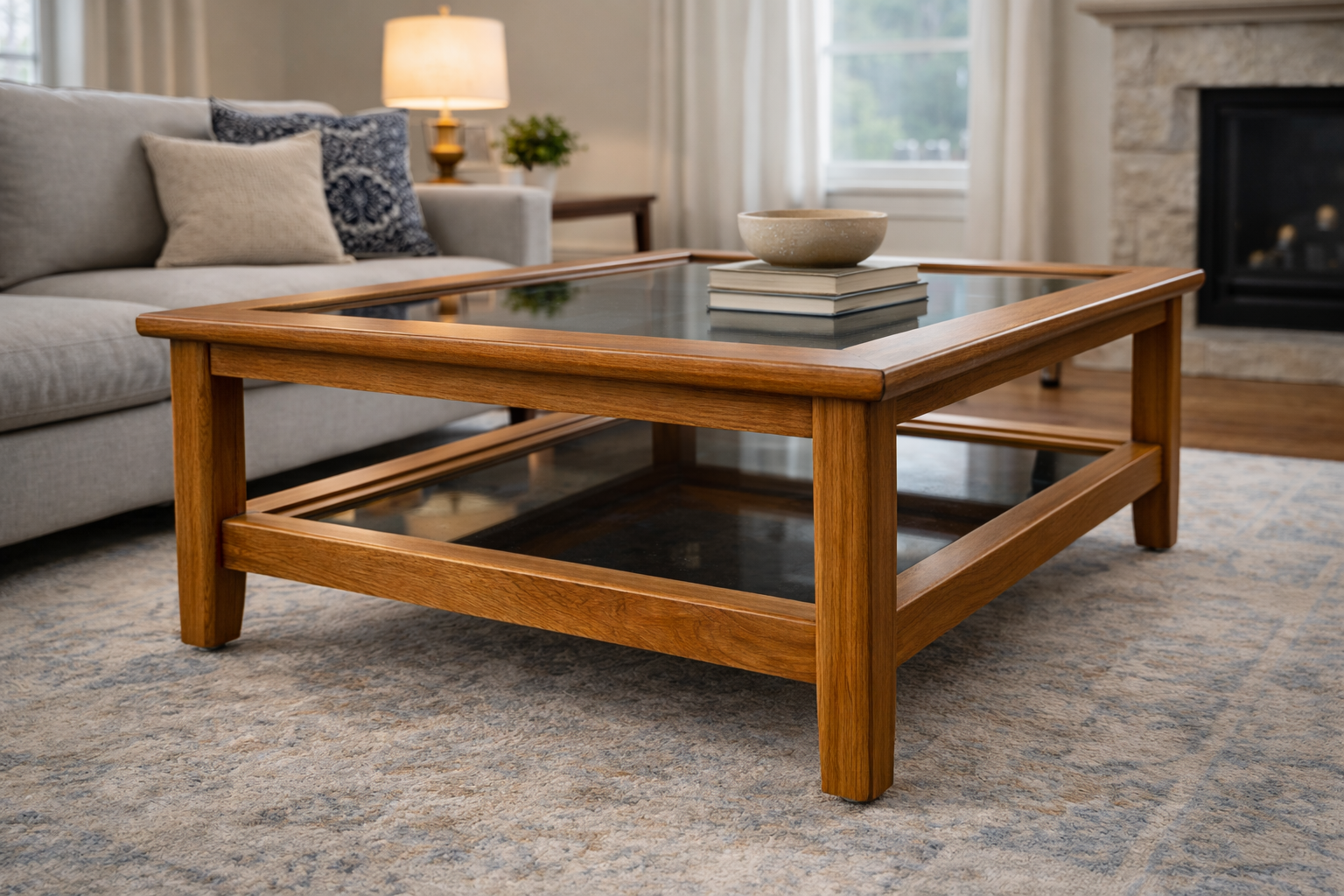
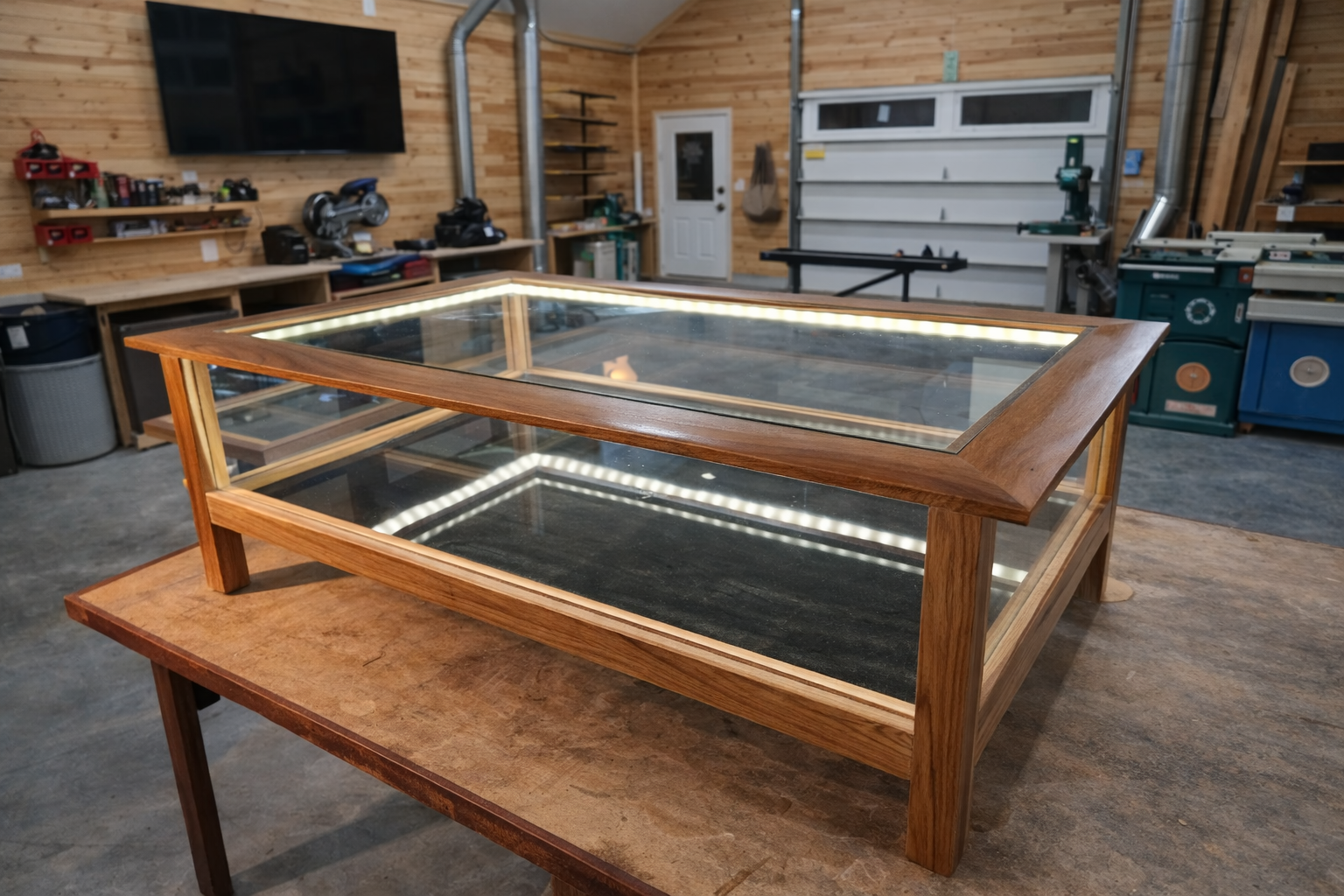
This coffee table was commissioned as a display piece designed to showcase artwork within the structure of the table itself. Built from solid pecan using traditional joinery, the piece evolved from rough lumber into a finished table through careful milling, joinery, and hand craftsmanship.
Selecting the Material
The client wanted to highlight the natural beauty of a warm, medium-brown hardwood. Pecan was a perfect choice. It can be locally sourced and is known for the strong contrast between early-season and late-season growth, which gives the wood its distinctive grain pattern. As a member of the hickory family, pecan is exceptionally hard, allowing refined furniture details to be shaped without sacrificing strength or durability.
Joinery and Structure
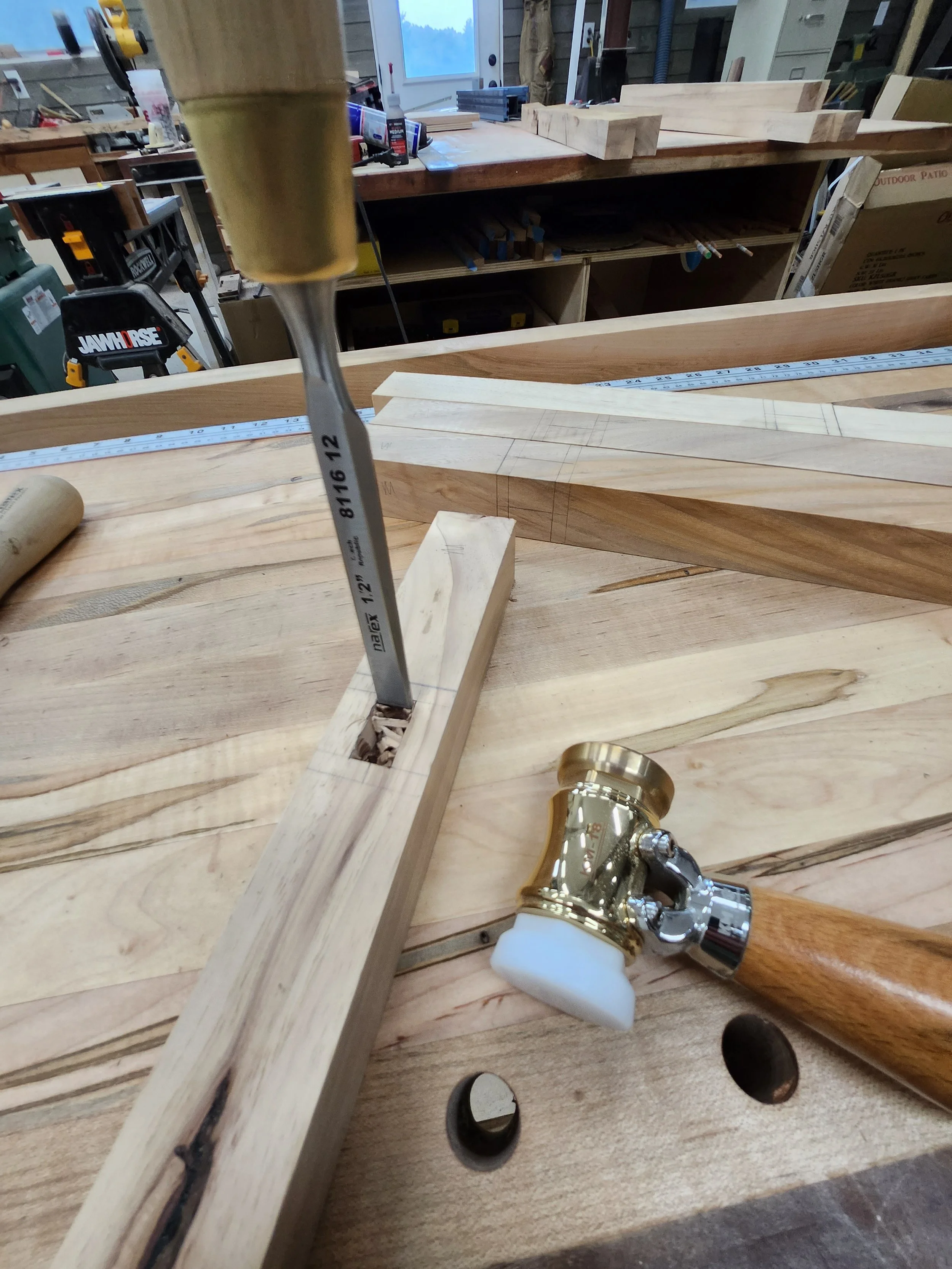
Here, I am chopping a mortise for a mortise and tenon joint. Mortise and tenon joints are considered the strongest joint in all of furniture making.
Finishing Details
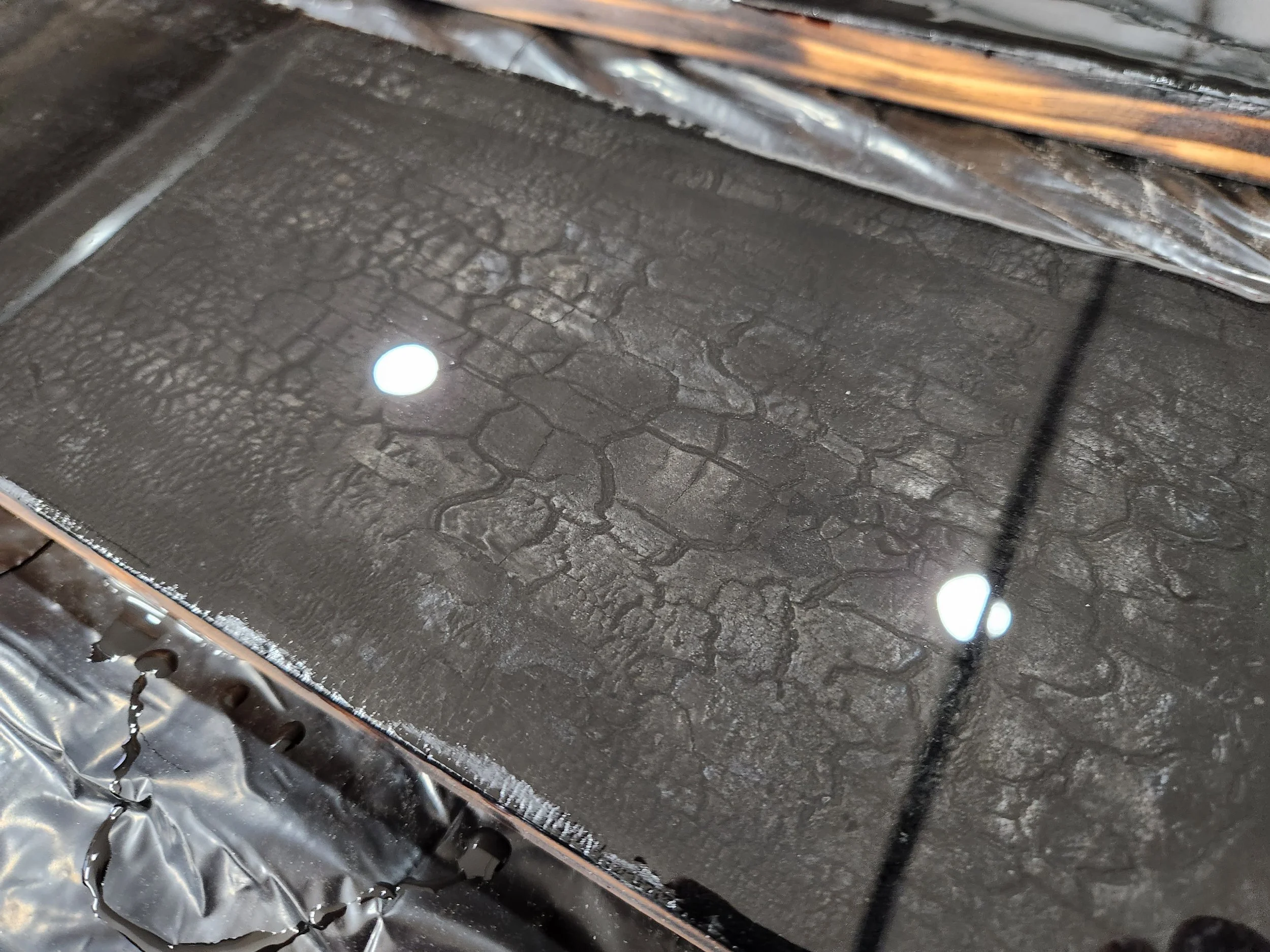
In this case, the client wanted the bottom shelf to resemble something “out of this world.” I burned the bottom shelf, then poured clear epoxy over the surface to give it a glass-smooth finish. LED lights were added to the underside of the top. The lights are powered by a rechargeable battery pack installed under the bottom of the piece. The lights are controlled with the client’s mobile phone.
Milling the Lumber
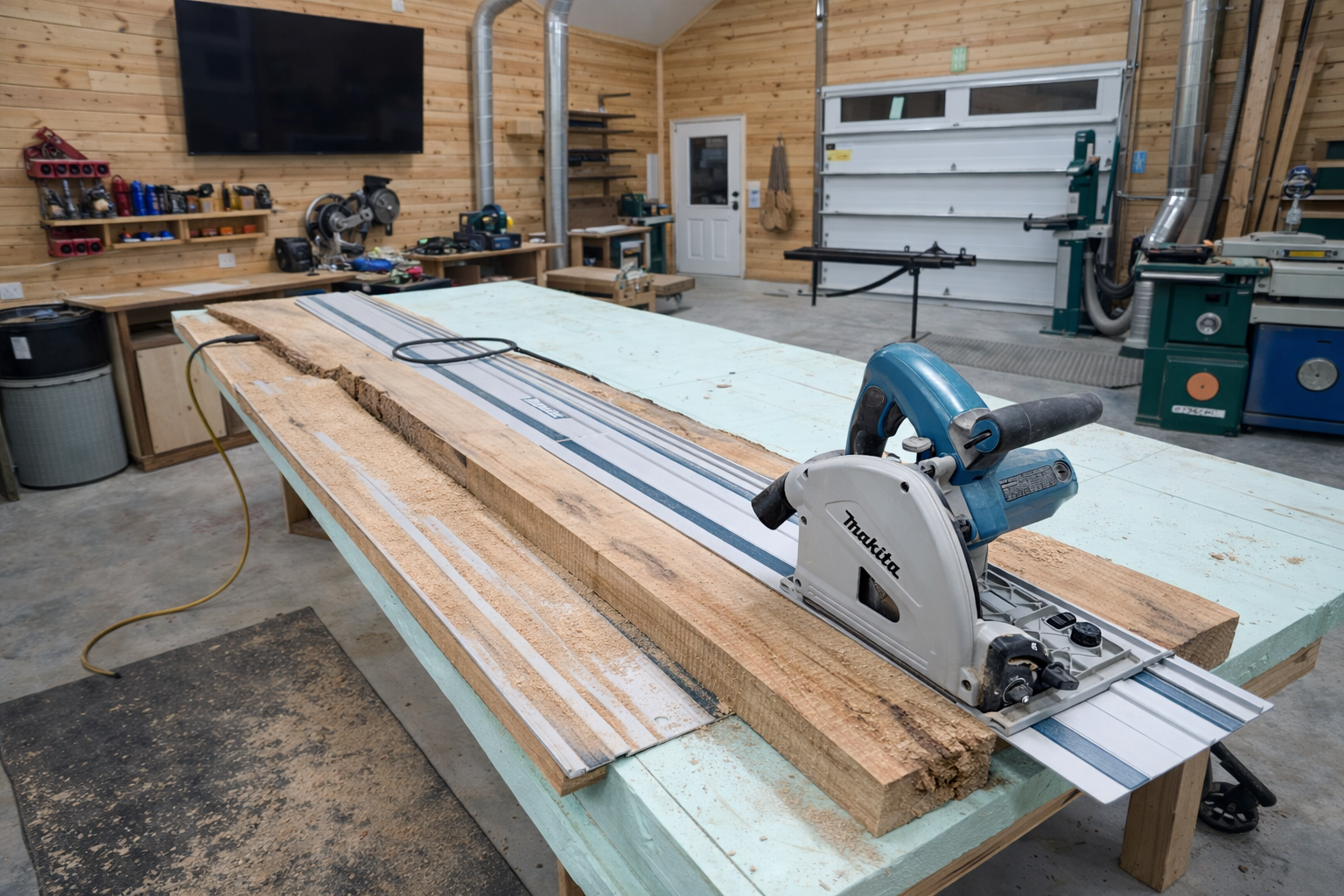
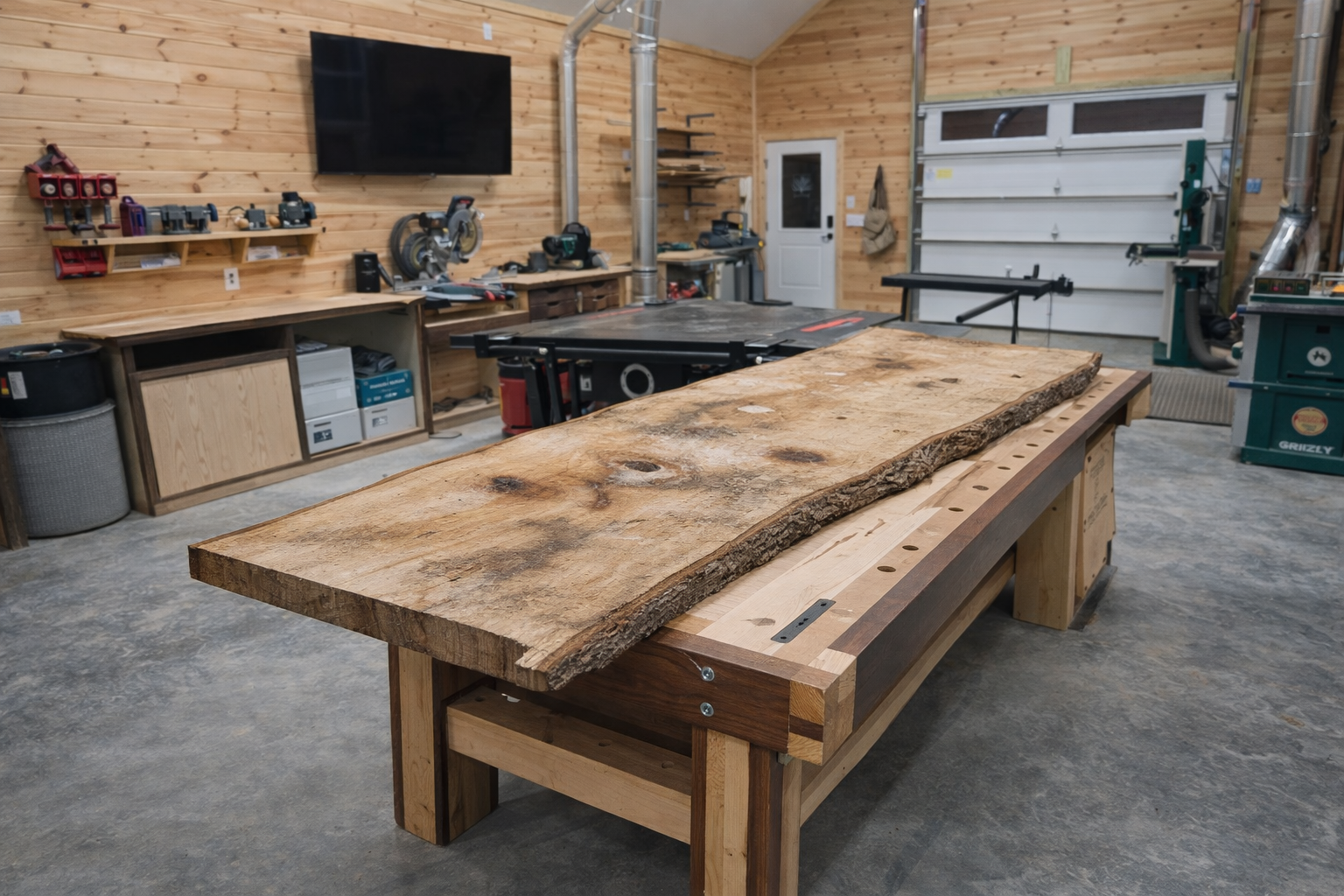
I’m breaking the slab down into smaller parts. In this case, I started with the legs.
Assembly
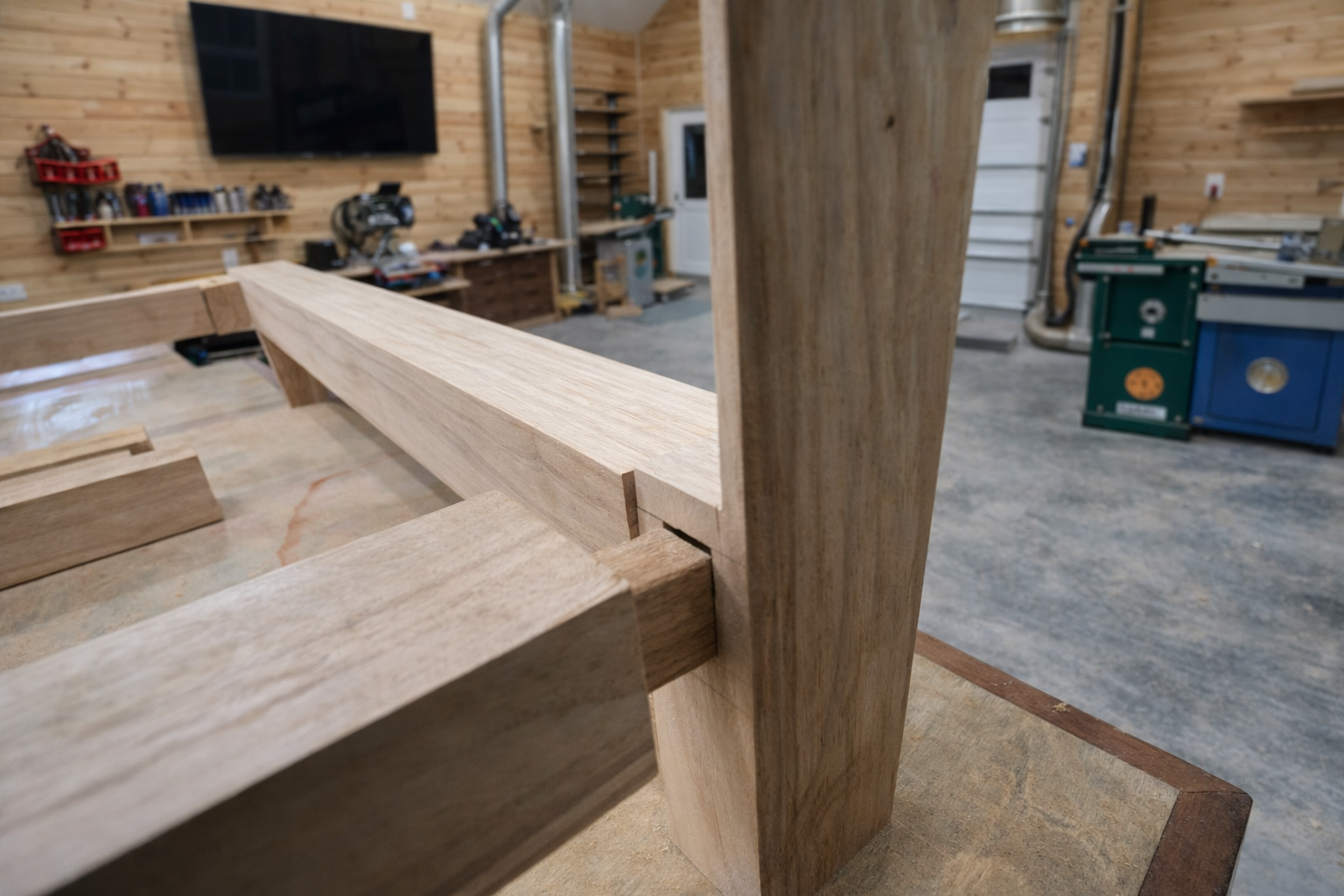
Fitting the mortise and tenon joints together.
Finished Piece
The client nor I could be happier with how this piece turned out.